

For most homeowners across southern Alabama, the septic system is one of those things that quietly does its job day after day without a second thought. You run the dishwasher, take a shower, do a load of laundry, and everything just disappears. Until it doesn’t.
Understanding how your septic system operates is one of the most practical things you can do as a property owner. Your home might sit on a few wooded acres in Loxley or a suburban lot in Fairhope — either way, what happens beneath the surface directly affects your property’s health, your family’s safety, and your long-term budget. Getting a handle on septic system basics in Daphne and across the surrounding areas starts with knowing what you’re working with.
A Quick Look at What a Septic System Actually Does
A septic system is an underground wastewater treatment structure. It processes all the water and waste that leaves your home through toilets, sinks, showers, and appliances — treating it on-site rather than routing it to a municipal sewer line. For rural and suburban properties throughout our service areas, these systems are the backbone of daily sanitation.
The core process works in stages. Waste flows from the home into the tank, solids settle and separate, liquids move forward for further treatment, and the soil itself does the final filtering. The concept is straightforward, but each component has to be functioning properly for the whole system to perform. For a deeper look at what installation involves from the ground up, our overview of septic services in Alabama covers the full picture.
The Main Components and How They Work Together
The Septic Tank
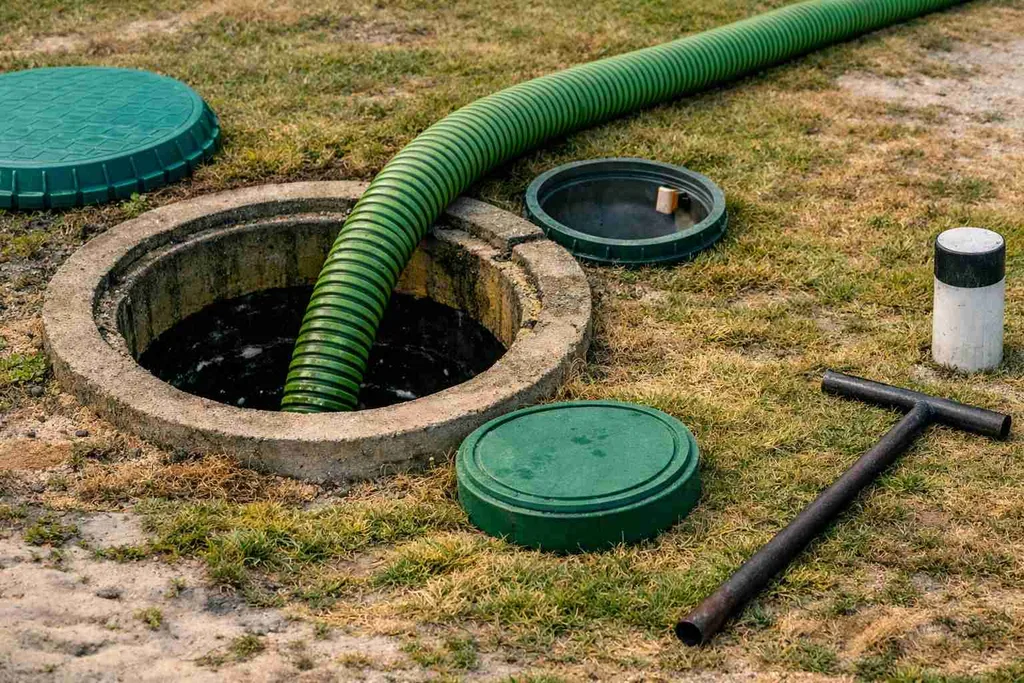
The tank is typically buried just a few feet from the home, constructed from concrete, fiberglass, or polyethylene. Wastewater enters the tank, where it naturally separates into three layers. Solids sink to the bottom as sludge, fats and oils float to the top as scum, and the liquid in the middle (called effluent) moves forward to the next stage. Naturally occurring bacteria inside the tank break down solids over time, but they cannot eliminate them entirely. That’s why routine pumping is essential.
The Distribution Box
After effluent leaves the tank, it often passes through a distribution box before entering the drainfield. The distribution box divides the flow evenly across the drainfield pipes. If it shifts, cracks, or becomes clogged, one section of the drainfield can become overloaded while others sit dry. Uneven distribution is a leading cause of premature drainfield failure — one of the more expensive repairs a homeowner can face. If you’re already noticing uneven ground saturation or soggy patches near your system, our drain field installation and repair services can help diagnose and correct the issue before it escalates.
The Drainfield
The drainfield, sometimes called the leach field, is where effluent disperses into the surrounding soil. Perforated pipes allow liquid to slowly spread out, and the natural filtration of the soil removes pathogens and contaminants before water reaches the groundwater table. Across our service areas, soil type and drainage conditions vary considerably. Sandy soils common in parts of Orange Beach drain quickly, while denser clay-heavy profiles near Foley can saturate more easily. Knowing your soil conditions matters when installing or maintaining a drainfield.
Pumps and Advanced Systems
Not every property has the terrain for a conventional gravity-fed system. In low-lying areas with high water tables — common in coastal and tidal parts of southern Alabama — advanced septic systems using grinder pumps and lift pumps are often required. These components move waste uphill or over longer distances to reach the drainfield. They add mechanical complexity, which means they require dedicated inspection and maintenance attention of their own.
Signs Your System Is Trying to Tell You Something
Many homeowners don’t realize their septic system needs attention until something goes wrong. Knowing what to watch for makes a real difference. Our post on common septic tank warning signs goes deeper on this topic, but here’s a quick reference:
- Slow drains throughout the house, not limited to one fixture
- Gurgling sounds from drains or toilets
- Wet, spongy ground near the drainfield, even during dry periods
- Sewage odors inside the home or in the yard
- Unusually lush or green grass growing over the drainfield area
- Sewage backup in toilets or floor drains
Any of these symptoms points to a system under stress. Catching them early is far less disruptive and far less costly than dealing with a full system failure.

What Regular Maintenance Actually Includes
Routine septic maintenance isn’t complicated, but it does require consistency. Here’s what a proper maintenance schedule typically involves:
- Pumping — Most tanks need to be pumped every three to five years, depending on household size and usage. Regular pumping removes accumulated sludge before it builds up to a level that pushes solids into the drainfield. If you’re unsure where you fall on that timeline, our guide on how often to pump your septic tank breaks it down by household size and usage patterns.
- Inspections — A professional inspection checks tank levels, inlet and outlet baffles, the distribution box, and the drainfield itself. Early detection of cracked components, root intrusion, or shifting can prevent much larger problems down the road. Our septic pumping and maintenance services include a thorough assessment each visit so nothing goes unnoticed.
- Root and Moisture Management — Tree roots naturally seek moisture, and septic pipes are a prime target. Managing vegetation near the system and monitoring moisture levels around the drainfield keeps the whole setup healthier over time.
- Mindful Use — Grease, so-called “flushable” wipes, harsh chemical cleaners, and medications can all disrupt the bacterial balance inside the tank or clog system components. Small daily habits make a real difference.
For homeowners exploring septic maintenance in Fairhope and the surrounding communities, building a service relationship with a knowledgeable local provider makes staying on schedule easier and far less stressful.
How Preventive Care Protects Your Investment
Drainfield replacement is among the costliest repairs a property owner can face. Keeping a system pumped and inspected on schedule is genuinely one of the highest-return maintenance habits you can build. Beyond the financial side, regular maintenance protects your family’s health, your neighbors’ groundwater, and the long-term value of your property.
Spring is a natural time to schedule a checkup. As temperatures warm across southern Alabama and rainfall picks up through March and April, the ground becomes saturated more easily, and systems under stress start showing their weaknesses. Getting ahead of that seasonal pressure with a professional inspection is a smart, proactive move.
Our team at P&C Solutions has been providing septic services AL homeowners rely on since 2020, working across Daphne, Fairhope, Orange Beach, Foley, Loxley, and the surrounding areas. We take time to walk customers through what we find, explain what it means, and help you understand the actual condition of your system — not just hand over an invoice. You can learn more about how we work and what drives our approach on our about page.
If it has been more than a few years since your last inspection or pumping, this spring is a good time to get it on the calendar. Give us a call at (251) 850-5884 or visit pcsolutionllc.com to schedule your service. A few minutes of planning now can save a significant amount of time, money, and stress later.
Frequently Asked Questions
What are the main components of a septic system?
A standard septic system includes a septic tank, a distribution box, and a drainfield. The septic tank separates solids from liquids, the distribution box spreads effluent evenly across the drainfield, and the surrounding soil filters wastewater before it reaches the groundwater table. Some properties with difficult terrain may also require pumps or advanced treatment systems.
How often should I have my septic tank pumped in Alabama?
Most septic tanks in Alabama should be pumped every three to five years, depending on household size and daily water use. Homes with more occupants or heavier water use may require more frequent pumping. Keeping a regular schedule helps prevent sludge buildup that can damage the drainfield and lead to expensive repairs.
What are the warning signs that my septic system needs service?
Common signs include slow or gurgling drains, sewage odors inside or outside the home, wet or soft ground near the drainfield, unusually green grass growing over the drainfield area, and sewage backups in toilets or floor drains. If any of these problems appear, it is best to schedule a professional inspection as soon as possible.
Why is regular septic maintenance important for homeowners in southern Alabama?
Southern Alabama often experiences heavy seasonal rainfall, and soil types across the region range from sandy coastal soils to dense clay. These conditions can place additional strain on septic systems. Routine septic maintenance in Fairhope and nearby communities helps identify issues early, extends system lifespan, and protects both your property and local groundwater quality.
Does P&C Solutions service septic systems outside of Daphne?
Yes. P&C Solutions provides septic services throughout Baldwin County, including Daphne, Fairhope, Orange Beach, Foley, and Loxley, Alabama. The team handles routine pumping, inspections, drainfield repair, and advanced system maintenance for homeowners and property managers across the area.