
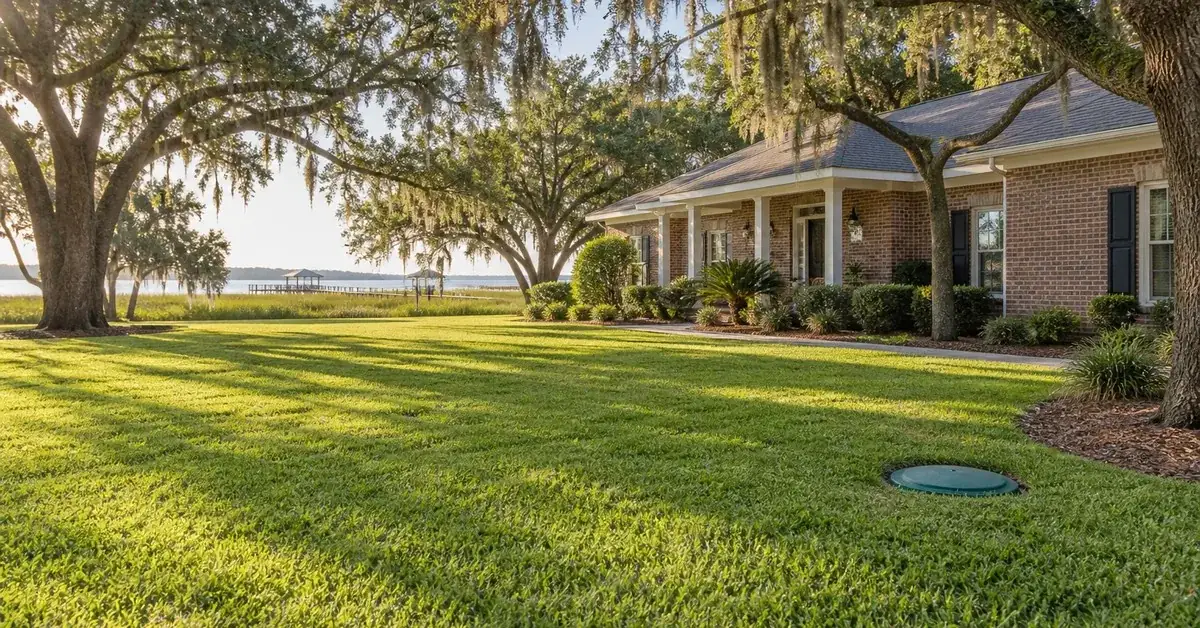
A septic system replacement in Baldwin County does not automatically mean replacing every buried component. The right scope depends on what failed, whether the existing tank is sound, how the drain field is performing, and what the property can support under current health department requirements. A careful diagnosis before excavation can prevent both an incomplete repair and an unnecessarily large project.
P&C Septic Solutions handles septic tank installation, drain field installation and repair, and advanced systems for properties across coastal Alabama. The first step is to separate symptoms from causes, then plan around the soil, site access, household use, and permit path.
Key Takeaways
- Slow drains or sewage odors do not prove that the tank itself has failed.
- A sound tank may sometimes remain while the drain field or pump components are replaced.
- Standing water, roof runoff, and poor grading can overload a system that is otherwise repairable.
- The replacement area needs room, access, and protection from future traffic or construction.
- Local approval should shape the design before equipment arrives.
Start with the failed function, not the visible symptom
Most homeowners first notice a backup, a slow fixture, a pump alarm, an odor, or unusually wet ground. Those clues matter, but several different problems can create the same symptom. A blocked building sewer can slow every drain. A failed pump can stop wastewater from reaching an elevated treatment area. Saturated soil can keep a drain field from accepting normal flow. A damaged tank baffle can send solids farther into the system than intended.
Begin by limiting water use and keeping people away from any soft, wet, or contaminated area. Do not open a tank, enter a tank, or attempt to work around electrical pump equipment. A professional evaluation should trace the wastewater path from the home through the tank and toward the treatment area. P&C also provides septic tank repair services when the problem can be corrected without a full replacement.
Questions the diagnosis should answer
- Is wastewater reaching the tank normally?
- Are the tank, lids, inlet, outlet, and baffles structurally sound?
- Does the system use a pump, control panel, or alarm that needs testing?
- Is the drain field receiving flow evenly, or is one area persistently saturated?
- Has runoff, vehicle traffic, root growth, or recent construction changed the site?
A diagnosis that stops at “the yard is wet” is not enough. Baldwin County properties can receive intense rain, and a low area may stay soft for reasons unrelated to the tank. The goal is to identify which function has been lost and why.
When the tank may be only part of the project
A septic tank holds wastewater long enough for solids to settle and lighter material to rise. The drain field then receives clarified effluent and relies on unsaturated soil for treatment. Because these jobs are different, one component can fail while another remains usable.
A tank with major structural damage, severe corrosion, unsafe lids, or failed connections may need replacement. Even then, the drain field still needs evaluation. Installing a new tank in front of a failing field does not restore soil treatment. The reverse is also true: replacing a saturated field while leaving a damaged tank or failed outlet in place can shorten the life of the new work.
Some sites need an advanced septic system because conventional gravity distribution does not fit the property conditions or approved design. That decision should follow site information and the authority’s requirements, not a preference for a particular piece of equipment.
Check water outside the system
Rainwater should not be asked to share the septic system’s treatment space. Downspouts, swales, irrigation, driveway runoff, and neighboring grades can send water toward a tank or field. During a wet September, that extra load may expose a marginal condition that was easy to miss during a dry stretch.
Walk the property after a normal rain and note where water starts, where it crosses the yard, and where it remains the next day. Photograph wet areas from fixed points. Mark the known tank, field, well, driveway, sheds, additions, and planned outdoor projects on a simple sketch. If broad grading or drainage work is contributing to the problem, P&C’s drainage and grading service can be evaluated alongside the septic scope rather than after the new system is installed.
Keep roof drains and sump discharges out of the septic system. The U.S. Environmental Protection Agency’s septic care guidance also advises directing rainwater drainage away from the drain field and using water efficiently so the system is not overloaded.
Plan the replacement area before excavation
A replacement design needs more than an open patch of grass. It needs approved soil conditions, separation from protected features, a discharge route that fits the design, and enough access for installation. It also needs protection after the work is complete.
Before a site visit, gather any permit, as-built drawing, pumping record, repair invoice, or survey you have. Records may show the original layout, but field confirmation is still important. The Baldwin County Health Department explains local permitting and design steps on its onsite sewage page, while Alabama’s state program provides the governing rules and forms.
Preserve access for the service life
Do not plan a driveway extension, pool, shed, patio, retaining wall, or deep-rooted planting over the proposed tank and field. Installation equipment needs a workable route that does not cross a well, damage a structure, or compact the treatment area. After installation, lids and service points should remain findable. The finished grade should shed surface water without burying access.
If you are also planning landscaping, start with the approved septic footprint. P&C’s guide to what can go over a septic drain field explains why shallow-rooted cover and light use are safer than structures, parking, or added irrigation.
Use household demand to review the design
Replacement planning should reflect the home that exists now, not only the household that lived there when the system was installed. Bedroom count, plumbing fixtures, a home addition, frequent guests, or a change in use can affect the review. Share those facts early. Hiding a planned addition may produce a replacement that does not fit the property’s near future.
Daily habits also matter. A leaking toilet, several back-to-back laundry loads, or a water softener discharge can send unnecessary water toward the treatment area. Correcting those loads will not revive failed soil, but it can protect a repaired or newly installed system. Spread high-water activities across the week and fix leaks promptly.
Build a comparison around scope, not price alone
Two estimates may describe different projects even when both use the word “replacement.” Ask each contractor to identify the components included, the permit assumptions, site restoration, electrical work, pump or alarm work, disposal, and the conditions that could change the scope. Clarify whether the quoted work includes only the tank, only the field, or the complete approved system.
Also ask how the contractor will protect the driveway, lawn, trees, utilities, and reserved treatment area. A low number that excludes necessary restoration or assumes clear access may not remain low once work starts. A written scope makes the comparison useful.
What to do this September
- Reduce water use if the system is backing up or the field is wet.
- Keep vehicles and people away from saturated or contaminated ground.
- Collect system records and sketch current property features.
- Document runoff after rain instead of relying on memory.
- Schedule a site evaluation before committing to excavation or another outdoor project.
Homeowners in Daphne and nearby communities can review P&C’s Daphne service area and request an evaluation. A clear diagnosis and an approved site plan give the replacement a better chance to solve the actual problem and remain serviceable.
Frequently asked questions
Does a septic backup mean I need a new tank?
No. A blockage, outlet problem, failed pump, saturated drain field, or excessive water load can also cause a backup. Limit water use and have the full system evaluated before choosing a replacement scope.
Can a drain field be replaced without replacing the tank?
Sometimes. The existing tank must be structurally sound, correctly sized for the approved use, and compatible with the permitted design. The contractor and local authority should confirm that decision.
Can heavy rain cause temporary septic problems?
Heavy rain can saturate soil and expose weak drainage or limited field capacity. Persistent surfacing wastewater, sewage odors, or indoor backups still need prompt professional evaluation.
What records help with a septic replacement?
Bring the original permit, as-built drawing, pumping and repair records, a current survey, and notes about additions or changes in household use. Photographs of wet areas after rain are also useful.
Should I landscape before replacing the system?
No. Confirm the approved tank, field, and access areas first. Hardscape, deep roots, irrigation, or vehicle traffic can conflict with installation and future system performance.