
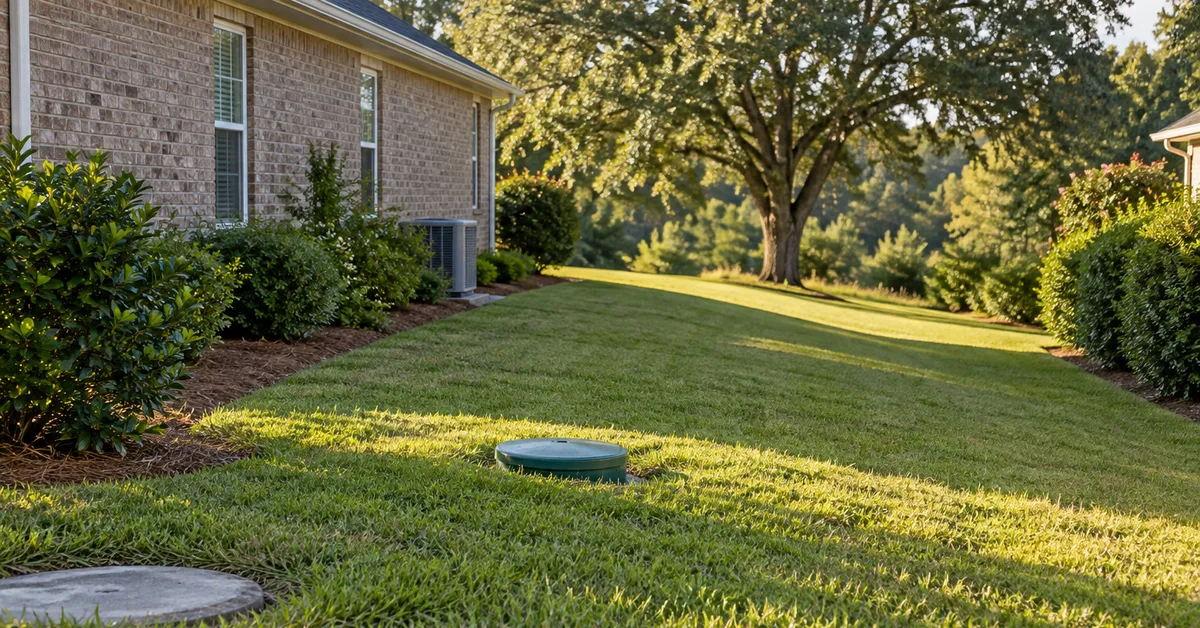
Buying a home with a septic system is not the same as buying one on city sewer. There is no monthly sewer bill to compare, and the most important part of the system is buried in the yard where a standard home inspection cannot see it. A failing septic system can mean a major repair or replacement after you have already closed, so it pays to learn what you are getting before the paperwork is signed.
This guide covers what to ask for, what a good septic inspection looks at, how the Alabama health department fits in, and the red flags that deserve a closer look. It applies to buyers across Baldwin, Mobile, and Escambia Counties and the rest of south Alabama.
Key Takeaways
- A septic system is a major part of the property. Start the evaluation early in your due diligence period, not the week of closing.
- Ask the seller for the system records and pumping history, and ask the local health department what is on file.
- A general home inspection does not replace a septic inspection. In Alabama, a home inspector's notes also do not stand in for a health department evaluation.
- If a lender or the contract calls for a health department evaluation, plan for the proof-of-pumping requirement.
- Visible warning signs in the yard are worth a conversation with the seller before you commit.
Step 1: Ask for the records
Start with paperwork. The Alabama Department of Public Health notes that property owners or their agents can ask the local health department for septic system information, and the permit on file (called the Approval for Use) usually includes a diagram of the actual installation. Real estate agents, attorneys, and septic companies can also make that request as the owner's agent.
Ask the seller for:
- The permit or Approval for Use and any system diagram
- Receipts or notes from past pumpings and repairs
- The age of the system, the tank size if they know it, and where the tank and drain field are located
- Any history of backups, alarms, or wet spots
Also pay attention to the bedroom count. A system is designed and permitted around the size of the home it serves, and adding bedrooms or a guest suite can change what it is approved to handle. If you plan to expand the house, check with the health department first.
Step 2: Get a real septic inspection
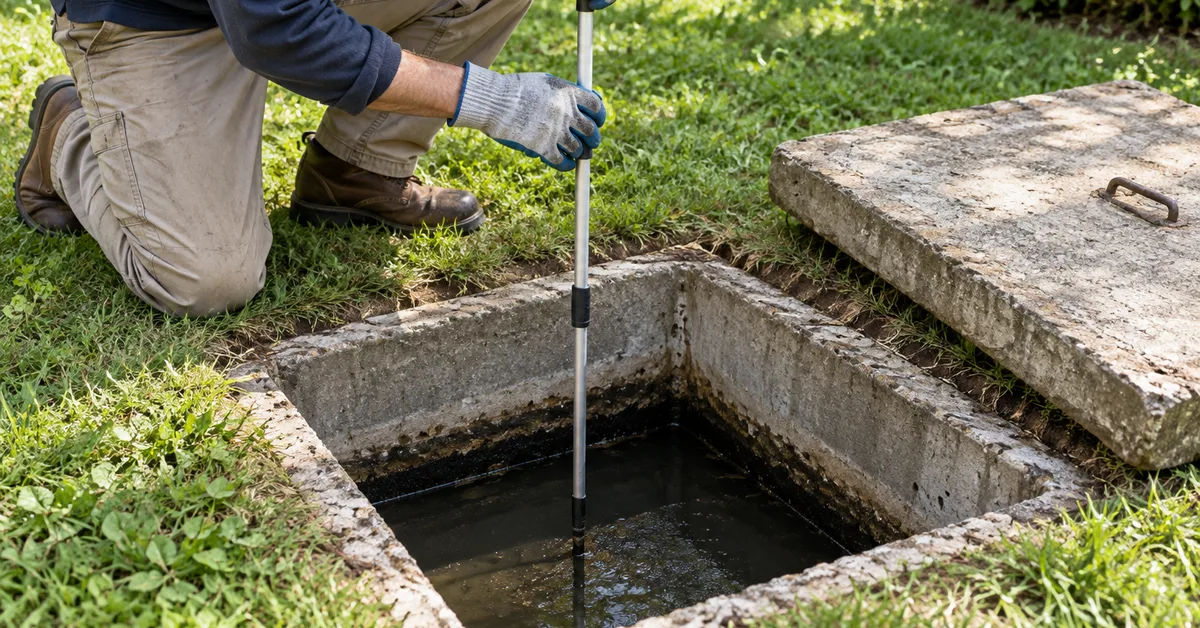
A general home inspector will usually note that a septic system exists, but a septic inspection is a separate job. A proper one covers:
- Tank condition. Cracks, baffle integrity, liquid level, and the depth of the sludge and scum layers.
- Flow at the inlet and outlet, and any sign of backup.
- The drain field, including surface signs of failure such as wet spots, odors, or unusually lush grass.
- The distribution box, where it can be reached.
- Pumps, floats, and control panels, for systems that use a pump or lift station.
The technician needs to uncover and open the tank to do this, so schedule the inspection early and get the seller's permission for access. P&C's septic inspections include a written report you can share with your agent, lender, or attorney, and many buyers combine the inspection with a pump-out since the tank is already open.
Step 3: Understand the health department evaluation
Alabama's onsite sewage rules (Rule 420-3-1-.33) describe an evaluation of an existing system that the local health department may perform when requested by the responsible person or by a lending institution representing the buyer or the seller. A few points from the rule are worth knowing:
- The evaluation does not guarantee that the system will keep working.
- Before the evaluation is completed, evidence must be provided that the tank has been pumped within the last 3 years by a licensed pumper.
- If the system was installed without a permit on or after March 18, 1982, the health department may decline to evaluate it and may require a site evaluation and a repair permit application.
- Inspections by a home inspector or a private septic company do not imply that the work was done under the state rules or that the system complies with them.
In practice, that means a private inspection tells you how the system is actually performing today, while the health department evaluation is the official record. Whether you need one, the other, or both depends on your lender and your sales contract. Ask both early. Ask your agent or attorney who is responsible for the cost, since that is something the contract decides.
Step 4: Walk the property and look for red flags
Even before a technician arrives, you can spot warning signs in a quick walk around the yard:
- Soggy or spongy ground, standing water, or sewage odors over the tank or drain field
- A bright green, unusually thick strip of grass over the drain field area while the rest of the lawn is dry
- Gurgling drains, slow toilets, or an alarm light on a control panel
- Driveways, sheds, pools, or additions built over the tank or field lines
- Large trees close to the system, since roots can damage pipes and field lines
- Lids that are missing, cracked, or buried so deep no one can find them
- Low spots where rainwater from the roof or driveway drains toward the system
None of these automatically kills a deal, but each one is a reason to ask questions and get the system inspected before your inspection period ends.
Step 5: Use what you learn
An inspection report gives you options. A healthy system is a green light. A system that is overdue for pumping is a simple fix you can ask the seller to complete before closing. A system with a failing drain field or a damaged tank is a negotiating point, or a reason to walk away. In those cases, a repair or replacement estimate from an installer helps you ask for a credit or a price adjustment with real numbers behind it. For a sense of what a larger project involves, see our guide to septic system replacement in Baldwin County.
After you move in, keep up with a routine schedule. Our post on how often to pump your septic tank explains how household size and tank size set the schedule, and our guide to septic tank warning signs covers what to watch for.
Frequently Asked Questions
Do I need a septic inspection when buying a home in Alabama?
The state rule describes a health department evaluation as something that can be requested by the responsible person or a lender, and your lender or contract may require one. Even when no one requires an inspection, it is strongly recommended. The cost of a failed system can be far more than the cost of looking at it first.
Can my home inspector check the septic system?
A home inspector may note what they can see, but they do not open and measure the tank or evaluate the drain field the way a septic professional does. Alabama's rule also says a home inspector's service does not imply the system complies with the state rules.
How long does a septic inspection take?
Most take 45 minutes to an hour, depending on tank access and the type of system. Schedule early so there is time to deal with anything the inspection finds.
Who pays for the septic inspection, the buyer or the seller?
That is set by your sales contract, not by a state rule. Talk with your agent or attorney before you order the inspection.
What if the inspection finds a problem?
You can ask the seller to repair it, negotiate a credit or price change, or walk away if your contract allows. Having a written report and a repair estimate makes that conversation easier.
Buying a Home With a Septic System?
Contact P&C Septic Solutions to schedule a pre-purchase inspection. We will check the tank, drain field, and any pumps, and give you a written report in plain language so you know what you are buying before you close.