
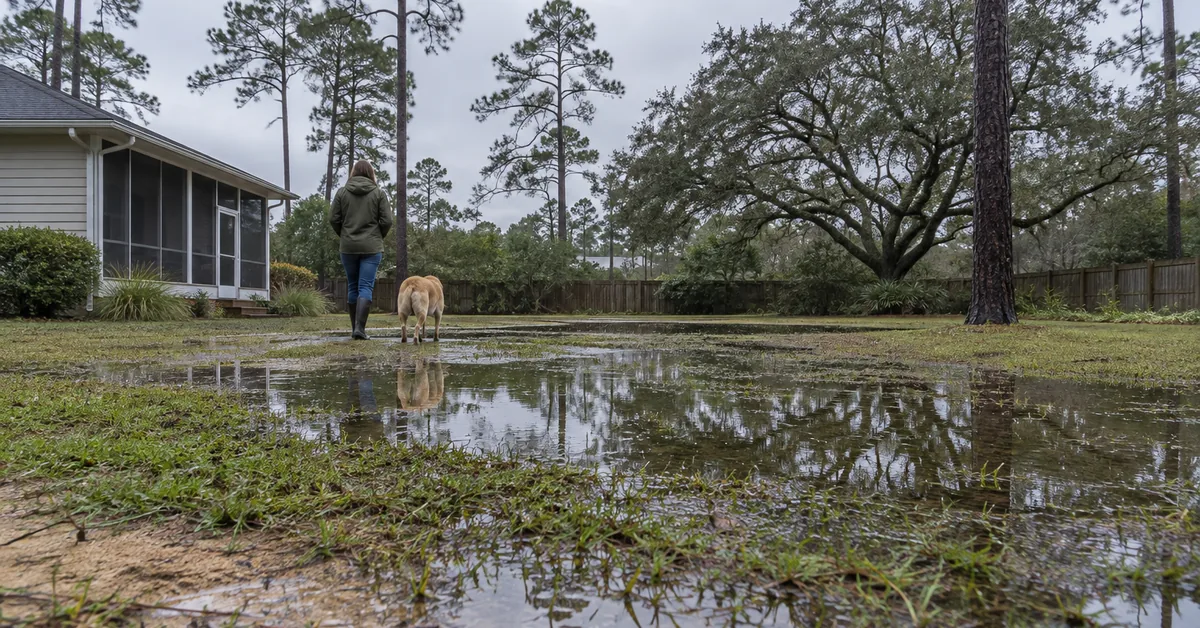
Your septic system worked fine all fall. Then the first stretch of steady winter rain arrives, the yard gets spongy, a shower drains slowly, and a damp patch shows up over the drain field. For many Baldwin County homeowners in Daphne, Fairhope and Foley, this is the season when a marginal drain field finally shows its hand.
Rain alone does not break a septic system. What rain does is take away the one thing a drain field needs most: dry soil underneath it. Here is why the Alabama Gulf Coast is hard on drain fields in winter, how to read the warning signs, and what to do while the ground is wet.
Alabama has an official wet season
The Alabama Department of Public Health onsite sewage rules actually define a "wet season," described as the part of the year with the highest rainfall and the most unfavorable conditions for a septic system, because of things like a perched or apparent high water table. The rules say the wet season in Alabama is generally December 1 through April 30, though it can vary by location.
The numbers fit what Baldwin County residents see. NOAA's 1991 to 2020 climate normals for a weather station near Fairhope show roughly 5 inches of rain a month from December through March. The U.S. Geological Survey describes the coastal part of Baldwin County as flat to gently rolling plains with tidal streams, marshes and wetlands, which says a lot about how wet the ground can get.
How a drain field depends on dry soil
A septic tank only does the first step of treatment. The real cleanup happens in the soil beneath the drain field, where bacteria break down contaminants before the water reaches groundwater. The Alabama Cooperative Extension System puts it simply: soil that is saturated does not treat wastewater effectively, and drain lines do not function as well when the ground is full of water.
That is why state rules require vertical separation between the bottom of the drain field trenches and the seasonal water table. Alabama rules call the saturated zone ASHES, short for average seasonal high extended saturation, and identify it by the shallowest soil color features that show the soil has been saturated for long periods. The idea is to keep effluent above that zone so the soil can treat it first. On a lot where that zone is shallow, there may be very little room to work with, and a system that was only just adequate in dry weather may have no margin when the water table rises.
Warning signs that show up in wet weather
The Alabama Department of Public Health and Alabama Extension list the same handful of symptoms of a system in trouble:
- Wet spots or standing water over the drain field, especially days after the rain has stopped
- Slow-draining sinks, tubs and toilets
- Gurgling sounds in the pipes
- Sewage odors in the yard or near the tank
- Unusually lush, green growth over the drain field
- Sewage backing up into the lowest drains in the house
A useful clue is how quickly things recover. A system that backs off a day or two after the rain stops is telling you its margin is thin. One that stays soggy or slow in a dry spell is more likely to have a real failure, such as clogged lines or solids that have reached the field. That is a clue, not a diagnosis, and either pattern is worth a professional look before the next storm.
What to do while the ground is soaked
You cannot dry out the yard, but you can reduce the load on it. These steps come straight from state and federal guidance:
- Cut back water use. Alabama Extension recommends conserving water during periods of high rainfall. Spread laundry over several days and fix leaky fixtures.
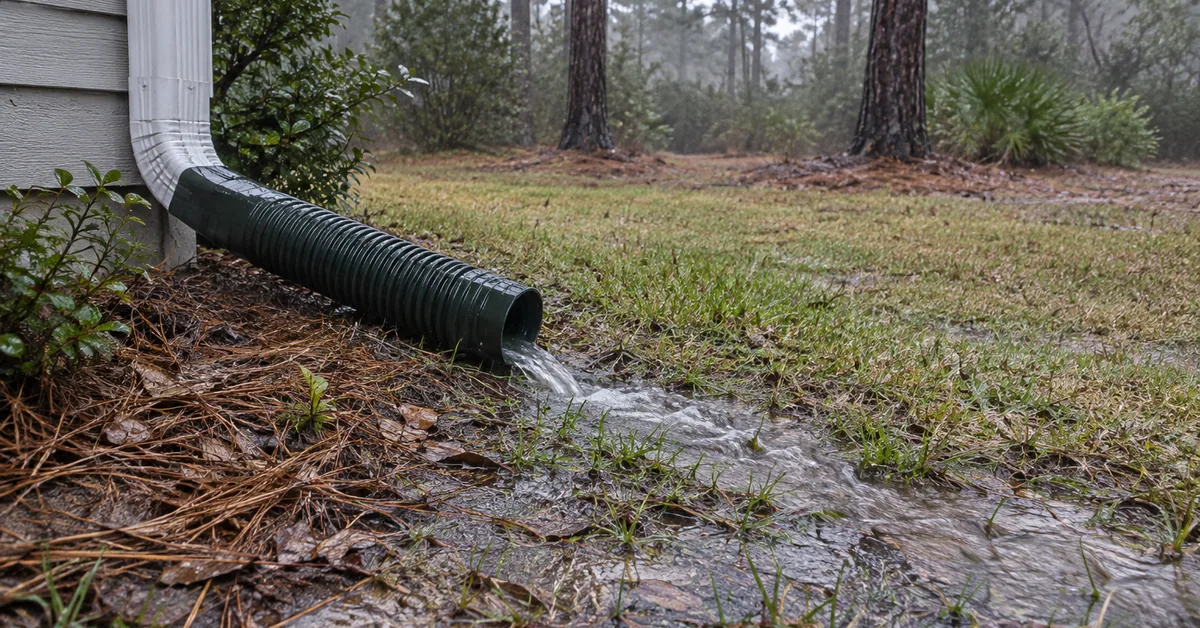
- Divert roof water away from the field. The Alabama Department of Public Health advises sending downspouts and other surface water away from the drain field, and state rules say drains, gutters, roofs and sump pumps must discharge away from the system.
- Stay off the field. The EPA notes that saturated soil is especially easy to compact, which reduces its ability to treat wastewater. That means no parking, driving or operating equipment over it.
- Do not rush to pump. The EPA says that pumping a tank during flooded or saturated drain field conditions is at best a temporary fix, and at worst can cause the tank to try to float out of the ground and damage its pipes. Talk to a professional first.
- Skip the additives. The Alabama Department of Public Health says additives do not fix a struggling system and can send solids into the drain field.
- Keep people and pets away from any surfacing wastewater. It can carry disease-causing organisms.
What a lasting fix can look like
If the diagnosis is a failed or overloaded drain field, the answer depends on why. Sometimes the problem is solids that have reached the lines because the tank went too long without pumping. Sometimes surface water is being sent onto the field. Sometimes the soil and water table on the lot simply cannot support a conventional gravity field.
Repairs are regulated. Under Alabama rules, a repair to an existing drain field needs a permit from the local health department, and the Alabama Department of Public Health says installers and pumpers must be licensed through the Alabama Onsite Wastewater Board. Repaired systems are inspected the same way new ones are. P&C Septic Solutions diagnoses saturated drain fields, repairs and installs drain fields and field lines, and designs mound and other engineered systems for lots with a high water table, and our site explains how we handle the permitting. The right option is the one that fits your soil and your budget, which is why we start with a diagnosis rather than a sales pitch.
Get ahead of the next storm
If your yard is dry today, this is the best time to look at your property. Check that downspouts discharge well away from the field. Make sure no one is parking on it. Note any low spots where water collects, since Alabama rules specifically say a drain field should not sit in a depressed area where storm water can pool. And if your tank is due for pumping, schedule it before the ground is saturated rather than during it.
Frequently Asked Questions
Does a wet yard mean my drain field has failed?
Not necessarily. Heavy rain can saturate a healthy drain field temporarily. The difference is how it behaves afterward. Persistent wet spots, odors or slow drains that continue after the soil dries are more concerning than a short-lived soggy patch.
Why does my drain field only act up in winter?
Winter falls inside Alabama's official wet season, when soils are at their wettest and the water table can rise, which cuts into the dry soil your system relies on. A system that is only marginally adequate often shows problems first during the wet season.
Do I need a permit to repair a drain field?
Generally yes. Alabama rules require a permit from the local health department to repair an existing system, unless the work meets the rules' definition of maintenance. Ask your health department or a licensed septic contractor what applies to your situation.
Should I pump the tank when the field is flooded?
Usually not until the ground has drained. The EPA warns against pumping a tank during flooded or saturated drain field conditions. A licensed professional can tell you what is safe for your tank and site.
Talk to Us About a Wet Drain Field
If your yard stays soggy, your drains are slow, or you are not sure whether what you are seeing is normal winter wetness or the start of a failure, contact P&C Septic Solutions through our contact page or request a quote. We will help you work out what is going on and what your options are.