
Properties in Daphne, AL sit on clay-heavy soils that slow drainage and trap moisture near tank lids, a condition that worsens during the region’s wet winters and humid summers. Orange Beach, AL properties face sandy coastal soils and tidal influence that can shift tank positioning over time. Fairhope sits on a bluff above Mobile Bay, with older subdivisions, established tree canopy, and clay-heavy subsoil that creates its own particular repair challenges. A single diagnostic approach does not translate cleanly across all three areas, which is why septic tank repairs Fairhope, AL require local knowledge of how this specific ground behaves under pressure.
Septic tank repairs in Fairhope, AL typically involve fixing cracked or deteriorating concrete tanks, replacing failed inlet or outlet baffles, repairing damaged lids and risers, addressing root intrusion, and resolving pump or float failures in systems that use a dosing chamber. Most repairs can be completed in a single visit once the problem is properly diagnosed, though drain field issues connected to the tank failure may require additional work.
Key Takeaways
- Fairhope’s clay-heavy bluff soils and mature tree canopy create specific failure patterns that differ from coastal and flatland properties nearby.
- August’s combination of peak household occupancy and heavy summer rainfall puts maximum stress on tanks that may already have minor defects.
- Baffle failure is one of the most common and most overlooked septic problems, and it often shows no obvious symptoms until the drain field is already affected.
- Many septic repairs in Fairhope can be completed without full tank replacement, but accurate diagnosis is what determines which path is appropriate.
- Delaying repairs during high-use periods increases the likelihood that a fixable problem becomes a full system failure.
What Fairhope’s Soil and Site Conditions Do to Septic Tanks Over Time
Fairhope’s elevation above Mobile Bay is one of its defining characteristics, and that topography shapes how septic systems age here. The bluff soils contain significant clay content, which expands and contracts with moisture changes. Over years of wet winters and dry summers, that movement puts stress on concrete tank walls and the joints where inlet and outlet pipes connect to the tank body. Small cracks form, and once water infiltrates the tank from outside, the internal chemistry changes. Groundwater intrusion dilutes the bacterial environment that makes a septic tank function, and it adds hydraulic load that pushes partially treated effluent toward the drain field before it is ready.
Mature trees are another factor that shows up consistently in older Fairhope neighborhoods. Root systems follow moisture, and a septic tank represents a reliable moisture source. We find root intrusion in inlet pipes, outlet pipes, and sometimes through hairline cracks in tank walls. This is a repair we handle regularly, and it is almost always more manageable when caught before roots have had years to expand inside the system. If your property has large oaks or other established trees within 20 to 30 feet of the tank location, that is worth factoring into how often you schedule inspections.
August specifically creates a convergence of stressors. Summer rental activity, visiting family, and general peak occupancy push daily water use well above the baseline a system was designed around. At the same time, Gulf Coast summer rain events add external hydraulic load through any existing cracks or compromised seals. This is the time of year when marginal systems fail, and it is also the time when the consequences of a failure are most disruptive. Our team handles septic tank repairs across Baldwin County, and August consistently brings the highest volume of urgent calls.
How Do You Know If Your Septic Tank Actually Needs Repair?
Some symptoms are obvious. Sewage odors in the yard, slow drains throughout the house, or wet spots above the drain field are signals that something has already progressed past the early stage. But the repairs we would rather help homeowners avoid are the ones that follow ignored warning signs that seemed minor at the time.
A gurgling sound from drains when water is running elsewhere in the house often points to a venting or baffle issue. A tank that fills unusually fast between pumping cycles may have a cracked wall allowing groundwater in. A system that has not been pumped in more than three years is operating with reduced capacity regardless of whether symptoms are visible. If you have a pump-assisted system and the alarm light has triggered even once and been reset without investigation, that is a diagnostic conversation worth having. Our pump installation and repair work often starts with exactly that kind of call.
For homeowners who are not sure what type of system they have or how it is configured, our guide to the three types of septic systems covers the basics in plain terms. Understanding your system type is the first step toward recognizing when something is off.
What Septic Tank Repairs Fairhope, AL Actually Look Like in Practice
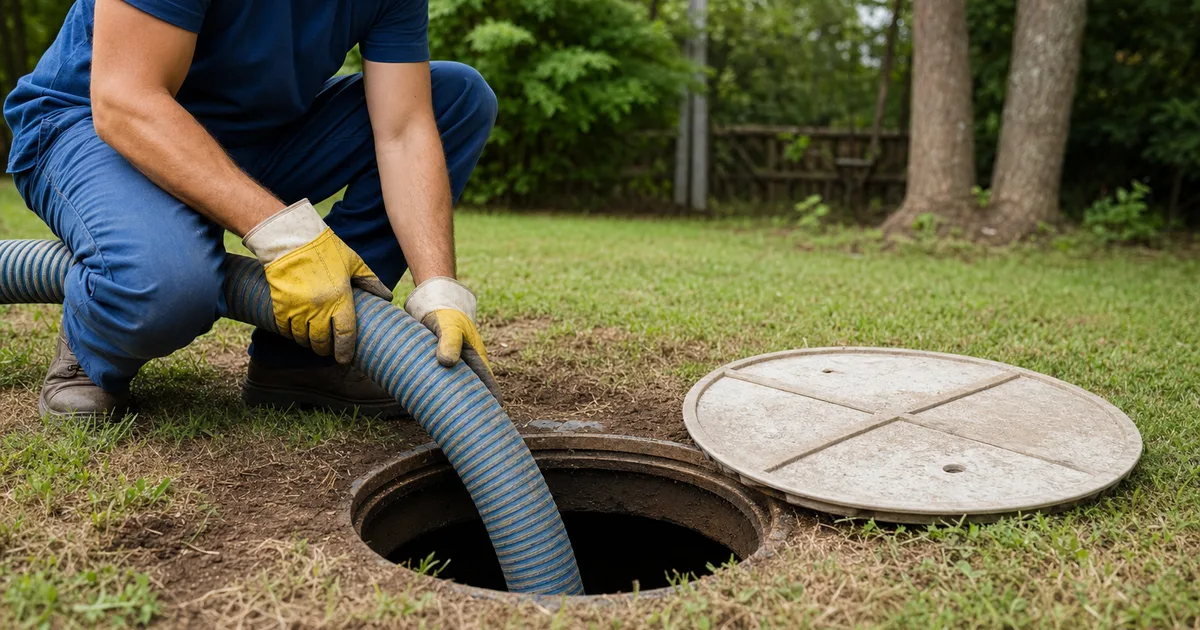
When we arrive for a repair assessment, the first step is locating the tank if the homeowner does not have a site plan. We expose the lids, inspect the inlet and outlet baffles, check the tank walls for visible cracking or separation, and assess the liquid level relative to the outlet pipe. If the level is abnormally high, that typically points to a drain field problem rather than the tank itself, and we will evaluate the drain field as a separate but connected issue.
Baffle replacement is one of the most common repairs we complete. Baffles are the internal structures that direct flow through the tank and prevent scum and solids from reaching the outlet pipe. Concrete baffles in older tanks deteriorate over time, and plastic or PVC replacement baffles are more durable and easier to inspect going forward. This repair is straightforward when the tank is accessible and the rest of the structure is sound.
Crack repair on concrete tanks depends heavily on the location and extent of the damage. Surface cracks that have not compromised the tank’s structural integrity can often be sealed. Tanks with significant wall failure or collapsed sections are typically better candidates for full replacement, and we will give you an honest assessment of which path makes sense for your specific situation. We provide a custom estimate before any work begins so you have a clear picture of what is involved.
For properties where the existing system cannot handle the household’s demands regardless of repair, our team also evaluates whether an advanced septic system is the appropriate long-term solution. That is a separate conversation, but one worth having if repairs have become recurring rather than isolated events.
Routine septic pumping and maintenance remains the most effective way to avoid reaching the repair stage in the first place. A tank that is inspected and pumped on a regular schedule gives us the opportunity to catch baffle wear, early cracking, and root intrusion before any of those issues cascade into something larger. That is especially relevant in Fairhope, where the combination of clay soils, mature trees, and seasonal rainfall creates conditions that reward consistent attention.
Frequently Asked Questions About Septic Tank Repairs Fairhope, AL
How long does a septic tank repair take in Fairhope?
Most repairs, including baffle replacement, lid or riser work, and minor crack sealing, are completed in a single visit once we have assessed the tank. More complex situations involving structural damage or drain field connections may require a follow-up visit. We give homeowners a clear timeline before work begins so there are no surprises.
Can tree roots really damage a septic tank in Fairhope?
Yes, and it is a common issue in older Fairhope neighborhoods where mature oaks and other large trees are well established. Roots follow moisture and can enter through pipe joints, inlet and outlet connections, or hairline cracks in concrete walls. Catching root intrusion early makes the repair significantly simpler than addressing it after years of unchecked growth.
What is the difference between a septic tank repair and a drain field repair?
The tank holds and separates waste before effluent moves to the drain field for final treatment in the soil. A tank repair addresses the physical structure, baffles, lids, or pump components within the tank itself. A drain field repair addresses the distribution pipes and soil absorption area. The two are connected, and a failed baffle can damage a drain field over time, which is why we assess both during a diagnostic visit. Our drain field services cover both installation and repair.
How do I know if my Fairhope septic system needs repair versus full replacement?
That determination depends on what we find during inspection. Tanks with isolated baffle failure, minor cracking, or pump issues are strong repair candidates. Tanks with significant structural compromise, repeated failures, or systems that are undersized for current household use may be better served by replacement or an upgrade to a more capable system. We walk through the findings with you and explain the reasoning behind our recommendation before any decision is made. You can also review our related post on septic tank repairs in Daphne for additional context on how we approach diagnosis across the region.
If you are heading into the back half of August with a system that has been showing any of the signs described above, the window to address a manageable repair before it becomes something larger is narrow. Septic tank repairs Fairhope, AL homeowners delay most often are the ones that end in full excavation. Reach out to our team to schedule a diagnostic visit before peak-season stress turns a minor issue into a major one.