
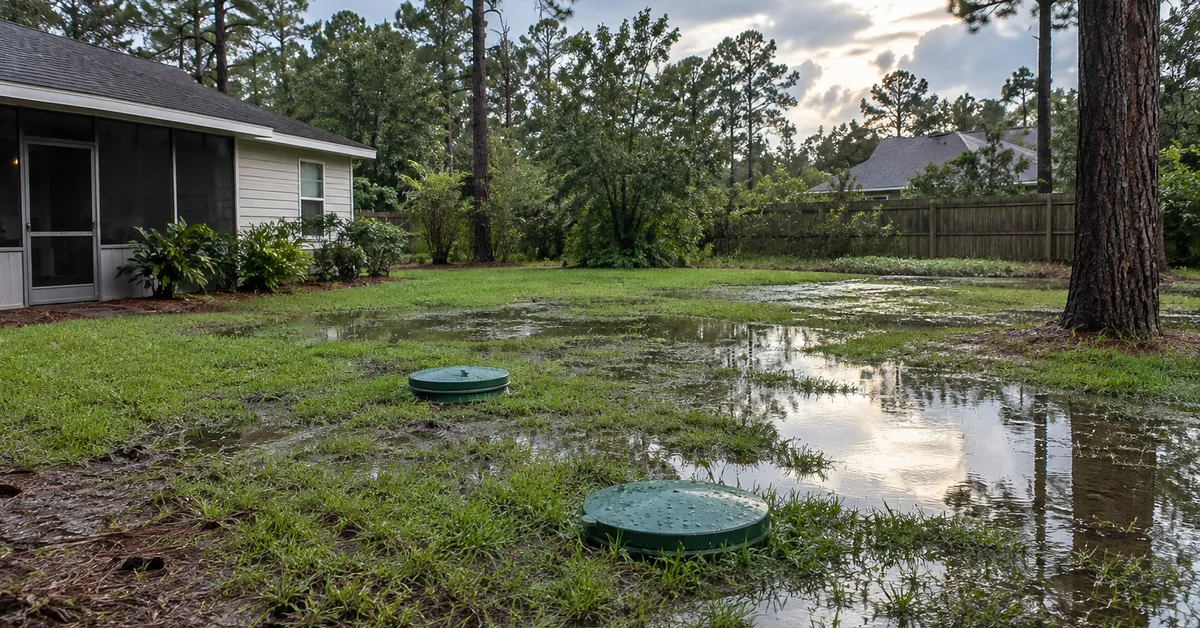
Hurricane season on the Gulf Coast officially runs through November 30, and a slow-moving storm or a week of heavy rain can soak the ground long after the wind is gone. When the soil around your home is saturated, your septic system loses the thing it depends on most: dry, absorbent soil to finish treating the wastewater. What you do in the first hours and days matters more than most homeowners realize, and a few common instincts, like rushing to pump the tank, can actually make things worse.
This guide walks through what to do before a storm, while the water is up, and after it drops. It follows guidance from the U.S. Environmental Protection Agency and the CDC, and it comes from a local Gulf Coast contractor that was founded in the wake of Hurricane Sally in 2020.
Key Takeaways
- Do not pump your tank while the ground is flooded or saturated. An empty tank can float or shift, and pumping is only a temporary fix at best.
- Cut back water use hard while the drain field is underwater. Wastewater cannot be treated in saturated soil.
- Most buried tanks survive a flood, but pump chambers and tanks can fill with silt that needs a professional cleaning.
- Keep vehicles and equipment off the drain field. Saturated soil compacts easily, and compaction can cause long-term failure.
- If you have a well, do not drink the water until it has been tested.
Why storms are hard on septic systems
A septic system has two jobs. The tank separates solids from liquid, and the drain field lets the liquid soak into the soil, where it is filtered and treated. During a flood, the second job stops. If the water table is at or above the level of the drain field, the soil has nowhere to take the wastewater. The result can be slow drains, gurgling fixtures, odors, or sewage backing up into the house.
Coastal Alabama makes this more likely. Much of Baldwin and Mobile County sits low and flat, rainfall totals during tropical systems can be very high, and many properties already have a seasonally high water table. That is why a system that works fine all summer can struggle for days after a storm even if nothing is actually broken.
Before the storm: simple preparation
If a storm is on the way, a few steps can reduce damage. None of them require opening the tank.
- Know where everything is. Locate your tank lids or risers, the pump chamber if you have one, and the control panel. Knowing this ahead of time helps a technician work fast after the storm.
- Do not pump the tank right before the storm. The CDC recommends keeping the tank at least half full so it is less likely to collapse or float out of position in saturated ground.
- Make sure lids and access ports are secure. The goal is to keep floodwater and debris out of the tank. If a lid is cracked or loose, have it repaired before the season.
- Protect electrical components. If your system uses a pump or alarm, turn the pump off at the breaker before water reaches the area. Do not touch septic electrical equipment while it is wet.
- Do a little laundry planning. Run the big loads of laundry and dishes before the storm rather than during it, so you start with less water to push through the system.
If it has been a few years since your last service, a pre-season septic inspection or pump-out in dry weather is the best preparation of all. A tank with a healthy sludge level and intact baffles handles a wet season better.
While the water is up
Once the yard is flooded, the goal is simple: send as little water into the system as possible and stay safe.
- Reduce water use. Skip laundry and dishwasher loads, take short showers or hold off, and flush only when you need to. If your home has basement drains, the EPA suggests plugging them to keep sewage from backing up.
- Avoid floodwater. Floodwater can carry sewage and contamination. Keep children and pets out of standing water, especially over the drain field.
- Do not pump the tank. This is the step people get wrong most often. Emptying a tank in saturated ground can cause it to try to float out of the ground and can damage the inlet and outlet pipes. It also does not solve the problem, because the drain field is still underwater.
- Stay away from electrical parts. Treat the pump, float switches, and control panel as hazards until they are dry and a professional has checked them.
After the water drops: what to do first
Resist the urge to go back to normal use the minute the yard looks dry on the surface.
- Wait for the drain field to recover. The EPA advises not using the sewage system until the water level in the soil absorption area is lower than the water level around the house. If you are not sure, keep water use low until a professional says it is safe.
- Keep off the drain field. Do not drive, park, or run equipment over it. Saturated soil compacts, and compacted soil treats wastewater poorly.
- Look for warning signs. Settling or sinking ground near the tank, lids that have shifted, an alarm that will not reset, backups, strong odors, or wet spots that do not dry out all point to damage or a clogged field.
- Test your well water. If you are on a private well, do not drink or cook with the water until it has been tested. Your local health department can tell you how.
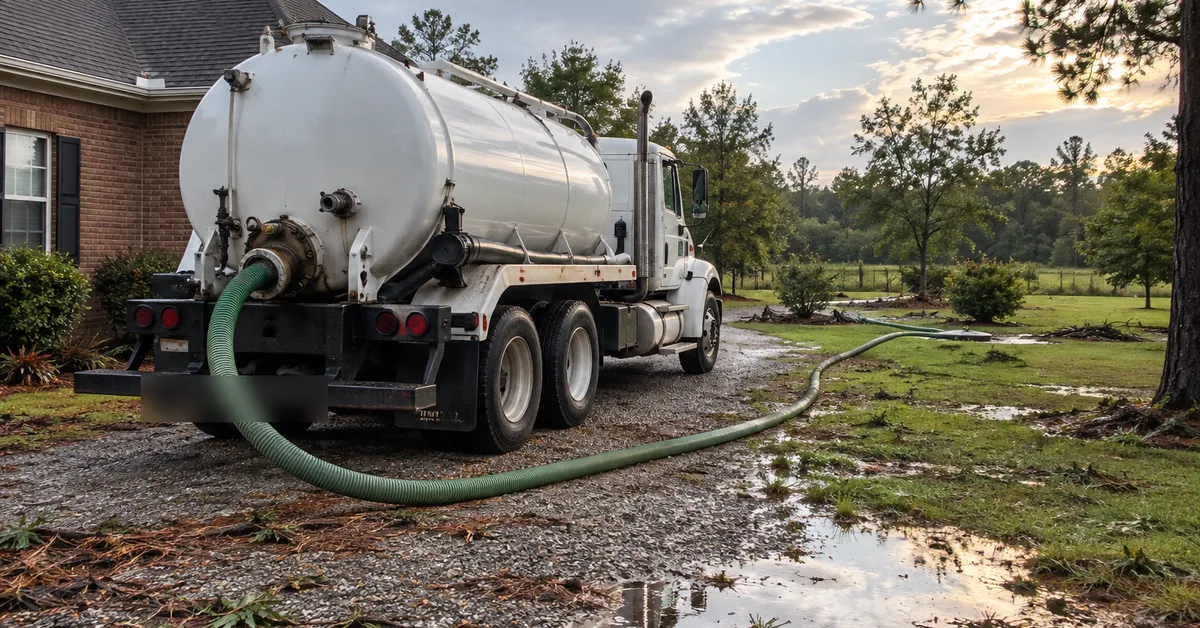
- Schedule a professional pump-out and inspection. Once the soil is no longer saturated, have the tank pumped to clear silt and debris. If you have a pump chamber or lift station, it needs to be cleaned too. Silt that settles in a pump chamber can end up in the drain field and clog it.
What flood damage looks like
Most septic tanks are buried and sealed, so they usually come through a flood intact. The more common problems are less visible:
- Silt and debris in the tank or pump chamber. This needs a professional cleaning. See our septic pumping and lift station maintenance services.
- Pump and control failures. Water and electrical parts do not mix. If your system has a pump, our pump service team can test and replace damaged components.
- A clogged or overloaded drain field. If silt has clogged the soil absorption area, the EPA notes a new system may be needed in the worst cases. Repairs to a drain field generally involve working with a soil professional and the local health department. See drain field installation and repair.
- Shifted or damaged lids, pipes, or risers. These are often fixable as a septic repair.
In Alabama, routine maintenance such as pumping a tank or replacing a pump or filter does not require a repair permit from the local health department. Repairing field lines does involve the health department and a soil professional. A reputable septic contractor will tell you which path applies to your situation before work starts.
When it is an emergency
Sewage backing up into the house, sewage pooling on the surface, or a system that is leaking near a well should be treated as urgent. Limit contact with the area, stop using water, and call a professional. P&C offers urgent septic service for situations like these across Baldwin, Mobile, and Escambia Counties and the surrounding area.
Frequently Asked Questions
Should I pump my septic tank before a hurricane?
Generally no. The CDC recommends keeping the tank at least half full ahead of a flood so it is less likely to float or collapse in saturated soil. The better time to pump is during dry weather before hurricane season, and again after the ground has dried following a flood.
How long should I wait to use my septic system after a flood?
Wait until the water in the soil around the drain field is lower than the water level around your house, and the ground is no longer saturated. In the meantime, keep water use to a minimum. If you are unsure, ask a septic professional to check the system first.
Can a flood ruin my septic tank?
It is not common, since tanks are buried and covered. The bigger risks are silt filling the tank or pump chamber, damage to pumps and electrical parts, and a drain field clogged with silt. Each of these can be checked in a single inspection.
Is it safe to drink well water after a flood?
Not until it has been tested. Flooding can contaminate wells, and a flooded septic system can add to the risk. Contact your local health department about testing.
Need Help After a Storm?
If your system is backing up, alarming, or just does not seem right after heavy rain, contact P&C Septic Solutions. We will check the tank, pump chamber, and drain field, explain what we find in plain terms, and tell you what needs to be done now and what can wait.