
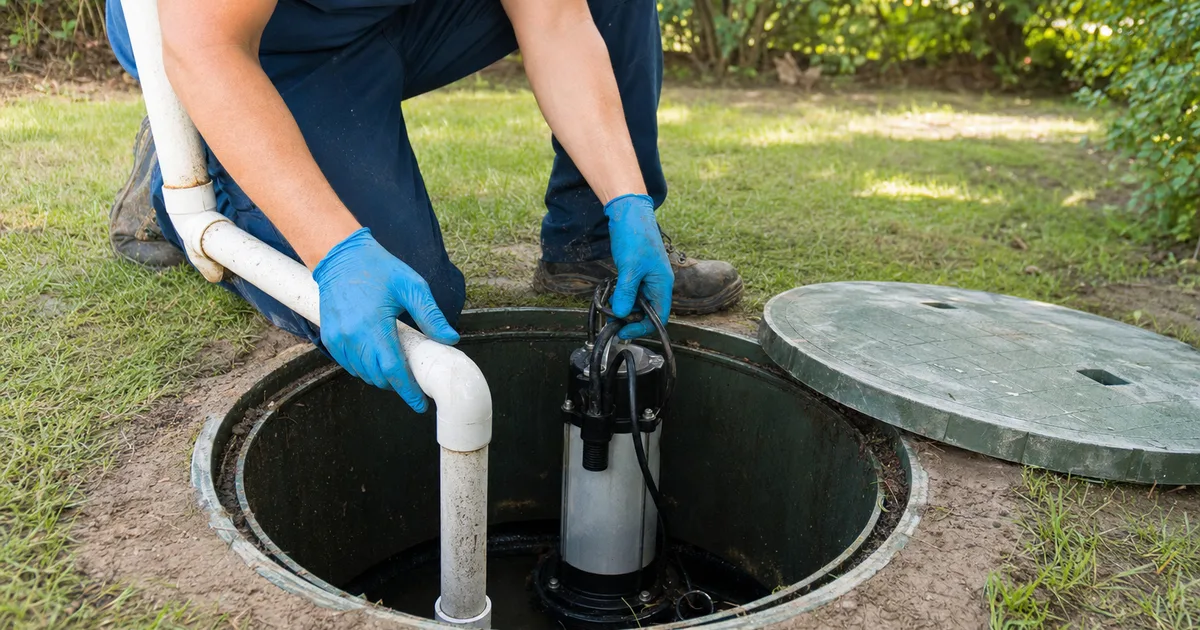
A property on the west side of Foley near the Riviera Centre corridor sits on flat, low-lying ground where standing water after a Gulf storm can linger for days. A property in Daphne, AL along the bluff above Mobile Bay drains differently, sits on a different soil profile, and puts different demands on its septic pump. These are not the same job, and treating them the same way is how pumps get undersized, improperly placed, or replaced too soon. Septic pump installation and repair Foley, AL is a service that has to account for where the water goes, how fast the ground absorbs it, and what the pump is working against during a July rain event that drops three inches in two hours.
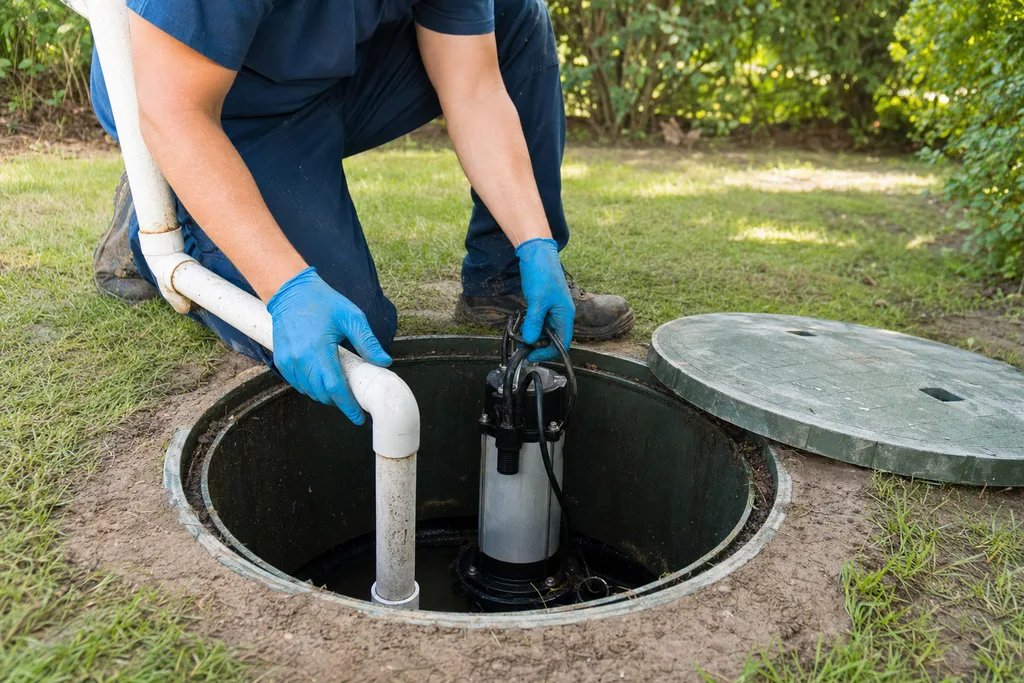
Septic pump installation involves selecting, sizing, and placing a pump that moves effluent from the tank to the drain field when gravity alone cannot do the job. Repair covers diagnosing failures in the pump motor, float switches, control panels, or discharge lines. In Foley, AL, both services are complicated by a shallow water table, heavy seasonal rainfall, and saturated soil conditions that put pumps under sustained load throughout the summer months. Getting this right means starting with the site, not the parts catalog.
Key Takeaways
- Foley’s flat terrain and high summer rainfall mean septic pumps work harder and fail faster without proper sizing and installation.
- Float switch failures and pump motor burnout are the most common repair calls we see after Gulf Coast storm events in July and August.
- A pump that was correctly sized for average conditions may be undersized for the wet season load in Baldwin County.
- Septic pump installation and repair Foley, AL requires permits through Baldwin County Environmental Services, and our team handles that process.
- Catching pump problems early, before a full failure, typically costs significantly less than emergency replacement after a system backs up.
Why Does Foley’s Terrain Make Pump Systems Work Harder Than They Should?
Foley sits in the flat coastal plain of Baldwin County, and that geography creates a specific set of problems for septic systems that rely on pumps. When the ground is already saturated from a storm, the drain field cannot accept effluent at its normal rate. The pump keeps running, the tank fills faster than it empties, and float switches that were calibrated for normal conditions start cycling more frequently than they were designed to handle. Over a summer with the kind of rainfall patterns we see on the Gulf Coast, that repeated stress shortens the life of the pump motor and wears out float switches well ahead of schedule.
We have responded to pump failures along County Road 20 and in the neighborhoods east of Highway 59 where the land barely rises above sea level. In those areas, a pump that was installed without accounting for wet-season load is going to struggle. Septic pump installation and repair Foley, AL starts with an honest assessment of the site, the soil absorption rate, and the realistic worst-case scenario for how much rain that system will need to handle in a single event. Our team does not skip that step.
If you are also dealing with surface water issues on your Foley property, our drainage and grading guide for Foley covers what homeowners should address before summer rain forces the issue.
What Does Septic Pump Repair Actually Involve in Foley, AL?
When a pump fails, the first question is always whether the pump itself is the problem or whether something upstream caused the pump to fail. A float switch stuck in the off position looks like a dead pump. A clogged inlet screen causes the motor to overheat and burn out. A control panel that has taken water intrusion from a storm event can send false signals and cycle the pump incorrectly until the motor gives out. Our repair process starts with diagnosing the actual failure point before anything gets replaced.
In Foley, we see a pattern every summer. Heavy rainfall in June and July pushes water table levels up, the pump runs longer cycles, and by mid-summer we are getting calls about systems that have gone quiet or backed up. Pump motor burnout is the most common culprit, followed closely by float switch failures. In some cases, the pump was simply undersized for the property’s actual output, and repair means replacement with a correctly sized unit rather than reinstalling the same model.
Septic pump installation and repair Foley, AL also involves verifying that the discharge line is clear and properly pitched. A line that has shifted over time or was installed with inadequate slope becomes a recurring problem because the pump has to work against backpressure every cycle. We check the full system, not just the component that stopped working.
For context on how pump systems fit into the broader septic picture, our post on septic tank repairs in Daphne, AL walks through how different components interact and what happens when one part of the system is stressed beyond its design capacity.
How Do We Approach Pump Installation for New and Existing Systems?
New pump installation in Foley typically comes up in two situations: a new septic system being built on a lot where gravity flow to the drain field is not possible, or an existing system that has had its pump fail and needs a full replacement rather than a repair. Either way, the process starts with the site conditions. We look at the elevation difference between the tank and the drain field, the estimated daily flow for the household or business, and the soil conditions that affect how the drain field will perform under load.
Baldwin County requires permits for pump installation, and our team manages that process from the initial application through inspection. This is not a step that homeowners should try to navigate alone, particularly in Foley where the Environmental Services office has specific requirements for systems in low-lying areas. Getting the permit right the first time avoids delays and ensures the installation is done to the standard that will hold up during a future inspection or property sale.
We also make sure the control panel and alarm system are correctly configured. A pump alarm that works properly gives you early warning before a failure becomes a backup. In a neighborhood like the ones near Graham Creek Nature Preserve, where lots can be large and the tank is sometimes a significant distance from the house, that alarm is the only way you know something is wrong before the problem reaches the living space.
Frequently Asked Questions
How long does a septic pump typically last in Foley, AL?
Most submersible septic pumps are rated for seven to ten years under normal conditions, but in Foley’s climate, heavy summer rainfall shortens that lifespan if the pump is running extended cycles through the wet season. Regular maintenance checks, including float switch inspection and motor amperage testing, can catch wear before it becomes a full failure. We recommend having the pump inspected any time the system is pumped out.
What are the signs that a septic pump needs repair in Foley?
The most common signs are slow drains throughout the house, gurgling sounds in the plumbing, the pump alarm activating, or sewage odors near the tank or drain field. In Foley’s flat terrain, you may also notice wet spots or unusually green grass over the drain field, which can indicate the system is not moving effluent properly. Any of these signs warrants a service call before the problem progresses.
Does septic pump installation and repair Foley, AL require a permit?
Yes. Baldwin County Environmental Services requires permits for septic pump installations, and in most cases for full pump replacements as well. Our team handles the permit application and coordinates the required inspection so homeowners do not have to manage that process themselves. Unpermitted work can create problems during property sales and may not be covered if issues arise later.
Can a pump system handle the heavy rainfall Foley gets in July and August?
A correctly sized and properly installed pump system can handle wet-season loads, but many systems in Foley were installed without accounting for peak storm conditions. If your pump is running constantly after heavy rain or the alarm is triggering regularly during storm season, that is a sign the system needs evaluation. We can assess whether the pump capacity matches the actual demand your property places on it during high-rainfall periods.
Foley has grown significantly over the past decade, and a lot of the septic systems serving that growth were installed during drier periods or sized to minimum code rather than to real-world conditions. That gap between minimum installation and what the Gulf Coast actually demands is where we spend a lot of our time. If you are ready to have your pump system evaluated, reach out to our team through the P&C Septic Solutions contact page.